Ayubowan !!! Welcome !!!
Sri Lankalasantha Tours, I'm Tour Operator and Travel Agent in Sri lanka. Our Staff always giving the best service to the foreigners who visiting to this land of paradise for their vacation. We have comfortable cars and vans with qualified, safely and professional drivers. Sri Lanka is amazing diversity of scenery. It is possible to pass brilliant green paddy field, sun-bronzed beaches, ruined cities, small lively villages..
Sri Lankalasantha Tours, I'm Tour Operator and Travel Agent in Sri lanka. Our Staff always giving the best service to the foreigners who visiting to this land of paradise for their vacation. We have comfortable cars and vans with qualified, safely and professional drivers. Sri Lanka is amazing diversity of scenery. It is possible to pass brilliant green paddy field, sun-bronzed beaches, ruined cities, small lively villages..
Contact : Mobil;-  +94777856771 Email :- lasantha777@hotmail.com
My gust photo

Sigiriya (Lion's rock ) is
a large stone and ancient rock fortress and palace ruin in the
central Matale District of Sri Lanka, surrounded by the remains of an
extensive network of gardens, reservoirs, and other structures. A
popular tourist destination, Sigiriya is also renowned for its ancient
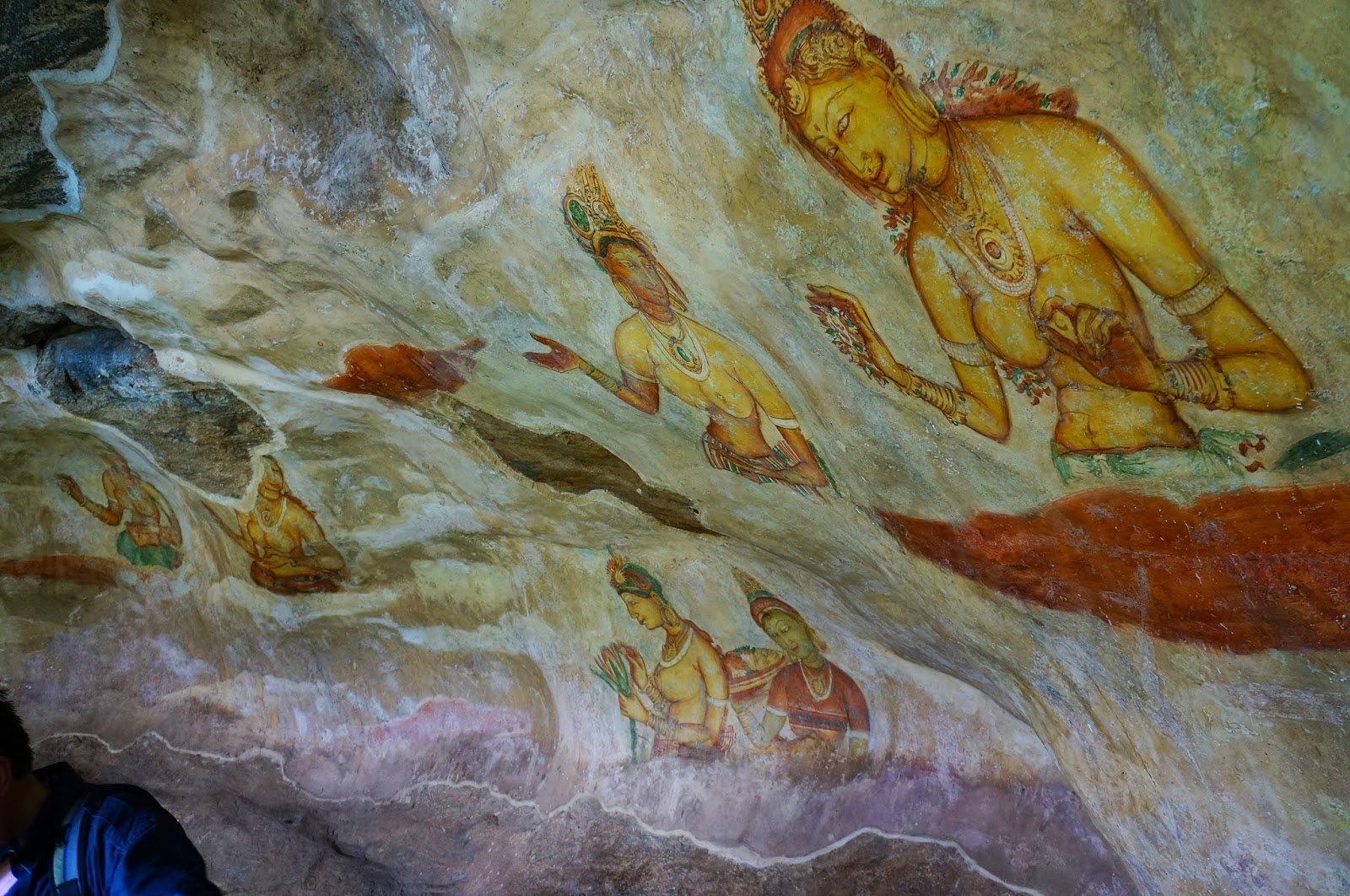
paintings (frescos), which are reminiscent of the Ajanta
Caves of India. It is one of the eight World Heritage Sites of Sri
Lanka. It is also declared by UNESCO as the 8th Wonder of the World.
Sigiriya may have been inhabited through prehistoric times. It was
used as a rock-shelter mountain monastery from about the 5th century
BC, with caves prepared and donated by devotees of the Buddhist Sangha.
According to the chronicles as Mahavamsa the entire complex was built
by King Kashyapa (AD 477 – 495), and after the king's death, it was
used as a Buddhist monastery until 14th century.
The Sigiri inscriptions were deciphered by the archaeologist Senarath
Paranavithana in his renowned two-volume work, published by
Cambridge, Sigiri Graffiti and also Story of Sigiriya.
Location and geographical features
Sigiriya is located in the Matale District, Central Province in the Central Province of Sri Lanka. It is within the cultural triangle, which includes five of the eight world heritage sites in Sri Lanka. The Sigiriya rock is a hardened magma plug from an extinct and long-eroded volcano. It stands high above the surrounding plain, visible for miles in all directions. The rock rests on a steep mound that rises abruptly from the flat plain surrounding it. The rock itself rises approximately 370 m (1,214 ft) above sea level and is sheer on all sides, in many places overhanging the base. It is elliptical in plan and has a flat top that slopes gradually along the long axis of the ellipse
Sigiriya is located in the Matale District, Central Province in the Central Province of Sri Lanka. It is within the cultural triangle, which includes five of the eight world heritage sites in Sri Lanka. The Sigiriya rock is a hardened magma plug from an extinct and long-eroded volcano. It stands high above the surrounding plain, visible for miles in all directions. The rock rests on a steep mound that rises abruptly from the flat plain surrounding it. The rock itself rises approximately 370 m (1,214 ft) above sea level and is sheer on all sides, in many places overhanging the base. It is elliptical in plan and has a flat top that slopes gradually along the long axis of the ellipse
History
In 477 CE, prince Kashyapa seized the throne from King Dhatusena, following a coup assisted by Migara, the king’s nephew and army commander. Kashyapa, the king’s son by a non-royal consort, usurped the throne from the rightful heir, Moggallana, who fled to South India. Fearing an attack from Moggallana, Kashyapa moved the capital and his residence from the traditional capital of Anuradhapura to the more secure Sigiriya. During King Kashyapa’s reign (477 to 495), Sigiriya was developed into a complex city and fortress. Most of the elaborate constructions on the rock summit and around it, including defensive structures, palaces, and gardens, date back to this period. The Mahavamsa, the ancient historical record of Sri Lanka, describes King Kashyapa as the son of King Dhatusena. Kashyapa murdered his father by walling him up alive and then usurping the throne which rightfully belonged to his brother Mogallana, Dhatusena's son by the true queen. Mogallana fled to India to escape being assassinated by Kashyapa but vowed revenge. In India he raised an army with the intention of returning and retaking the throne of Sri Lanka which he considered to be rightfully his. Knowing the inevitable return of Mogallana, Kashyapa is said to have built his palace on the summit of Sigiriya as a fortress and pleasure palace. Mogallana finally arrived and declared war. During the battle Kashyapa's armies abandoned him and he committed suicide by falling on his sword.
In 477 CE, prince Kashyapa seized the throne from King Dhatusena, following a coup assisted by Migara, the king’s nephew and army commander. Kashyapa, the king’s son by a non-royal consort, usurped the throne from the rightful heir, Moggallana, who fled to South India. Fearing an attack from Moggallana, Kashyapa moved the capital and his residence from the traditional capital of Anuradhapura to the more secure Sigiriya. During King Kashyapa’s reign (477 to 495), Sigiriya was developed into a complex city and fortress. Most of the elaborate constructions on the rock summit and around it, including defensive structures, palaces, and gardens, date back to this period. The Mahavamsa, the ancient historical record of Sri Lanka, describes King Kashyapa as the son of King Dhatusena. Kashyapa murdered his father by walling him up alive and then usurping the throne which rightfully belonged to his brother Mogallana, Dhatusena's son by the true queen. Mogallana fled to India to escape being assassinated by Kashyapa but vowed revenge. In India he raised an army with the intention of returning and retaking the throne of Sri Lanka which he considered to be rightfully his. Knowing the inevitable return of Mogallana, Kashyapa is said to have built his palace on the summit of Sigiriya as a fortress and pleasure palace. Mogallana finally arrived and declared war. During the battle Kashyapa's armies abandoned him and he committed suicide by falling on his sword.
Archaeological remains and features
In 1831 Major Jonathan Forbes of the 78th Highlanders of the British army, while returning on horseback from a trip to Pollonnuruwa, came across the "bush covered summit of Sigiriya". Sigiriya came to the attention of antiquarians and, later, archaeologists. Archaeological work at Sigiriya began on a small scale in the 1890s. H.C.P. Bell was the first archaeologist to conduct extensive research on Sigiriya. The Cultural Triangle Project, launched by the Government of Sri Lanka, focused its attention on Sigiriya in 1982. Archaeological work began on the entire city for the first time under this project. There was a sculpted lion's head above the legs and paws flanking the entrance, but the head broke down many years ago.
In 1831 Major Jonathan Forbes of the 78th Highlanders of the British army, while returning on horseback from a trip to Pollonnuruwa, came across the "bush covered summit of Sigiriya". Sigiriya came to the attention of antiquarians and, later, archaeologists. Archaeological work at Sigiriya began on a small scale in the 1890s. H.C.P. Bell was the first archaeologist to conduct extensive research on Sigiriya. The Cultural Triangle Project, launched by the Government of Sri Lanka, focused its attention on Sigiriya in 1982. Archaeological work began on the entire city for the first time under this project. There was a sculpted lion's head above the legs and paws flanking the entrance, but the head broke down many years ago.
Frescoes
John Still in 1907 suggested, "The whole face of the hill appears to have been a gigantic picture gallery... the largest picture in the world perhaps". The paintings would have covered most of the western face of the rock, covering an area 140 meters long and 40 meters high. There are references in the graffiti to 500 ladies in these paintings. However, many more are lost forever, having been wiped out when the Palace once more became a monastery − so that they would not disturb meditation. Some more frescoes, different from the popular collection, can be seen elsewhere on the rock surface, for example on the surface of the location called the "Cobra Hood Cave". Although the frescoes are classified as in the Anuradhapura period, the painting style is considered unique the line and style of application of the paintings differing from Anuradhapura paintings. The lines are painted in a form which enhances the sense of volume of the figures. The paint has been applied in sweeping strokes, using more pressure on one side, giving the effect of a deeper colour tone towards the edge. Other paintings of the Anuradhapura period contain similar approaches to painting, but do not have the sketchy lines of the Sigiriya style, having a distinct artists' boundary line. The true identities of the ladies in these paintings still have not been confirmed. There are various ideas about their identity. Some believe that they are the wives of the king while some think that they are women taking part in religious observances. These pictures have a close resemblance to some of the paintings seen in the ajanta caves in India
John Still in 1907 suggested, "The whole face of the hill appears to have been a gigantic picture gallery... the largest picture in the world perhaps". The paintings would have covered most of the western face of the rock, covering an area 140 meters long and 40 meters high. There are references in the graffiti to 500 ladies in these paintings. However, many more are lost forever, having been wiped out when the Palace once more became a monastery − so that they would not disturb meditation. Some more frescoes, different from the popular collection, can be seen elsewhere on the rock surface, for example on the surface of the location called the "Cobra Hood Cave". Although the frescoes are classified as in the Anuradhapura period, the painting style is considered unique the line and style of application of the paintings differing from Anuradhapura paintings. The lines are painted in a form which enhances the sense of volume of the figures. The paint has been applied in sweeping strokes, using more pressure on one side, giving the effect of a deeper colour tone towards the edge. Other paintings of the Anuradhapura period contain similar approaches to painting, but do not have the sketchy lines of the Sigiriya style, having a distinct artists' boundary line. The true identities of the ladies in these paintings still have not been confirmed. There are various ideas about their identity. Some believe that they are the wives of the king while some think that they are women taking part in religious observances. These pictures have a close resemblance to some of the paintings seen in the ajanta caves in India
The Mirror Wall
Originally this wall was so well polished that the king could see himself whilst he walked alongside it. Made of a kind of porcelain, the wall is now partially covered with verses scribbled by visitors to the rock. Well preserved, the mirror wall has verses dating from the 8th century. People of all types wrote on the wall, on varying subjects such as love, irony, and experiences of all sorts. Further writing on the mirror wall has now been banned.
Originally this wall was so well polished that the king could see himself whilst he walked alongside it. Made of a kind of porcelain, the wall is now partially covered with verses scribbled by visitors to the rock. Well preserved, the mirror wall has verses dating from the 8th century. People of all types wrote on the wall, on varying subjects such as love, irony, and experiences of all sorts. Further writing on the mirror wall has now been banned.
The gardens
The Gardens of the Sigiriya city are one of the most important aspects of the site, as it is among the oldest landscaped gardens in the world. The gardens are divided into three distinct but linked forms: water gardens, cave and boulder gardens, and terraced gardens.
The Gardens of the Sigiriya city are one of the most important aspects of the site, as it is among the oldest landscaped gardens in the world. The gardens are divided into three distinct but linked forms: water gardens, cave and boulder gardens, and terraced gardens.
The water gardens
The water gardens can be seen in the central section of the western precinct. Three principal gardens are found here. The first garden consists of a plot surrounded by water. It is connected to the main precinct using four causeways, with gateways placed at the head of each causeway. This garden is built according to an ancient garden form known as char bhag, and is one of the oldest surviving models of this form.
The second contains two long, deep pools set on either side of the path. Two shallow, serpentine streams lead to these pools. Fountains made of circular limestone plates are placed here. Underground water conduits supply water to these fountains which are still functional, especially during the rainy season. Two large islands are located on either side of the second water garden. Summer palaces are built on the flattened surfaces of these islands. Two more islands are located farther to the north and the south. These islands are built in a manner similar to the island in the first water garden.
The water gardens can be seen in the central section of the western precinct. Three principal gardens are found here. The first garden consists of a plot surrounded by water. It is connected to the main precinct using four causeways, with gateways placed at the head of each causeway. This garden is built according to an ancient garden form known as char bhag, and is one of the oldest surviving models of this form.
The second contains two long, deep pools set on either side of the path. Two shallow, serpentine streams lead to these pools. Fountains made of circular limestone plates are placed here. Underground water conduits supply water to these fountains which are still functional, especially during the rainy season. Two large islands are located on either side of the second water garden. Summer palaces are built on the flattened surfaces of these islands. Two more islands are located farther to the north and the south. These islands are built in a manner similar to the island in the first water garden.
The third garden is situated on a higher
level than the other two. It contains a large, octagonal pool with a
raised podium on its northeast corner. The large brick and stone wall
of the citadel is on the eastern edge of this garden.
The water gardens are built symmetrically on an east-west
axis. They are connected with the outer moat on the west and the large
artificial lake to the south of the Sigiriya rock. All the pools are
also interlinked using an underground conduit network fed by the lake,
and connected to the moats. A miniature water garden is located to the
west of the first water garden, consisting of several small pools and
watercourses. This recently discovered smaller garden appears to have
been built after the Kashyapan period, possibly between the 10th and
13th centuries.
The boulder gardens
The boulder gardens consist of several large boulders linked by winding pathways. The gardens extend from the northern slopes to the southern slopes of the hills at the foot of Sigiriya rock. Most of these boulders had a building or pavilion upon them; there are cuttings that were used as footings for brick walls and beams. The audience hall of the king was situated in the boulder garden, the remains of which are seen on the flattened and polished summit of a large boulder. There is also a five-meter-long granite throne in this hall. The throne is carved from the boulder itself, and is not separated from it. Another notable feature in the boulder garden is the Cistern rock, named after a large, carved cistern atop it. A large archway, created by two boulders, provides access to the terraced gardens.
The boulder gardens consist of several large boulders linked by winding pathways. The gardens extend from the northern slopes to the southern slopes of the hills at the foot of Sigiriya rock. Most of these boulders had a building or pavilion upon them; there are cuttings that were used as footings for brick walls and beams. The audience hall of the king was situated in the boulder garden, the remains of which are seen on the flattened and polished summit of a large boulder. There is also a five-meter-long granite throne in this hall. The throne is carved from the boulder itself, and is not separated from it. Another notable feature in the boulder garden is the Cistern rock, named after a large, carved cistern atop it. A large archway, created by two boulders, provides access to the terraced gardens.
The terraced gardens
The terraced gardens are formed from the natural hill at the base of the Sigiriya rock. A series of terraces rises from the pathways of the boulder garden to the staircases on the rock. These have been created by the construction of brick walls, and are located in a roughly concentric plan around the rock. The path through the terraced gardens is formed by a limestone staircase. From this staircase, there is a covered path on the side of the rock, leading to the uppermost terrace where the lion staircase is situated.
The terraced gardens are formed from the natural hill at the base of the Sigiriya rock. A series of terraces rises from the pathways of the boulder garden to the staircases on the rock. These have been created by the construction of brick walls, and are located in a roughly concentric plan around the rock. The path through the terraced gardens is formed by a limestone staircase. From this staircase, there is a covered path on the side of the rock, leading to the uppermost terrace where the lion staircase is situated.


